The Virtue of Resilience
I've missed more than 9000 shots in my career. I've lost almost 300 games. 26 times, I've been trusted to take the game winning shot and missed. I've failed over and over and over again in my life. And that is why I succeed.
- Michael Jordan, American Basketball Superstar
When it comes to business, the United States is like a shooting guard, who, heedless of the airball he hoisted a minute before, stands twenty-three feet from the basket and demands the ball as the clock ticks down. Excess confidence? A lack of awareness of one's limitations? Sure. But it also signifies an ability to not let recent failure stymie new efforts.
- Daniel Gross, from his book Pop: Why Bubbles are Good for the Economy
On February 16, 2002, with two tenths of a second left in a game against the Phoenix Suns, basketball superstar Michael Jordan hit a winning 16 foot jump shot. After the game, his coach, Doug Collins, commented to reporters “Did you know that he missed the two shots before that? He didn’t.” People tend to think of Jordan as an unqualified success; after all, has always been a star, and his teams have always been winners: As a freshman, he led the University of North Carolina to the NCAA championship in 1982. As a pro, Jordan was the star of the Chicago Bulls, who won six NBA titles during the 1990s, and he was the league’s Most Valuable Player five times. He also played for the 1984 and 1992 U.S. Olympic teams, both of which won gold medals. Perhaps the best-known athlete in the world at the beginning of the 21st century, Jordan is considered by many to be the finest basketball player of all time.
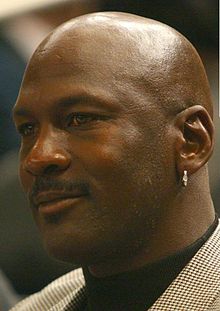
- Michael Jordan
However, Jordan is also a consummate gamesmen who has shown resilience, both in his athletic endeavors and in his personal life. As a sophomore, he was cut from his high school basketball team, but that only increased his resolve to become a star. Soon after his professional team, the Chicago Bulls, won a third straight championship, with Jordan as MVP, his father was murdered in a robbery attempt. About this time there was also growing media focus on Jordan’s gambling. Bored with basketball, and looking for new challenges and change, he retired in 1993 to pursue a career in baseball. He was not successful in the minor leagues and returned to basketball and the Bulls at the end of the 1994-95 season. He retired again in 1999 to become a part owner and president of the Washington Wizards basketball team. He returned to the court in 2001, at the age of 38, and played two successful seasons for the Wizards, who shortly thereafter fired him from his position as team president. In 2002 his wife, Juanita, filed for divorce, but they reconciled, only to agree to an amicable divorce at the end of 2006, resulting in a huge divorce settlement. In all aspects of his life, Jordan has a long history of failing, and then trying again, sometimes returning to what he knows, sometimes trying something new.
Jordan’s athletic exploits and charisma led to many product endorsements; he has been featured in ads for Nike shoes, McDonalds restaurants, Hanes underwear, long-distance company WorldCom, Gatorade beverages and other products. His entrepreneurial endeavors include restaurants, golf equipment, clothing, sports videos, basketball camps and a host of other activities. He has also starred in an animated movie, Space Jam. Fiercely competitive, he is a man who has to be in the game, whether the game is being scored on the Jumbotron or by his CPA.
All athletes fail from time to time, and the great ones forget about it and move on to the next victory. Defensive backs in football tend to be cocky and confident, even though their failures can be horribly public. A great defensive back may be beaten for a touchdown by a wide receiver, but once the play is over, it’s forgotten. As a commentator once said, “good defensive backs have bad memories.” The best athletes, like the best entrepreneurs, learn from their mistakes, but they don’t dwell on them. In his book Pop, Daniel Gross explains how this same sort of resilience keeps entrepreneurs in the game despite repeated failure. He sites early telegraph entrepreneurs as an example: “Manic, undeterred by failure, heedless of practicalities, eager to spend other people's money, armed with unrealistic forecasts, they threw up wires on poles the way kids spray Silly Putty at birthday parties, fell flat on their faces, and built again.”
Great entrepreneurs and great athletes both share the same sort of inner confidence that leads them to believe that, eventually, they will prevail, no matter how often they fail. The smart ones realize that, while Babe Ruth was the home run king of his time, he was also the strike out king – he struck out in 24% of his at-bats, compared with a league average of only 12%, so he struck out twice as often as average. And of players with at least 400 homeruns, he struck out more often than anyone else. * But people only remember the home runs. The same is true in business – most new business ventures fail, and are quickly forgotten. But a string of failures and one great business makes for a very successful entrepreneur.
Resilience is not the same as poor judgment, although the line is often a fine one. Watching skier Caroline Lalive fall during the 2002 Winter Olympics, after falling in her previous 8 consecutive races, one is tempted to wonder why she doesn’t give up the sport and try something else. Not everyone is meant to be a downhill ski racer, and not everyone is meant to be an entrepreneur. Sometimes giving up one sport for another, or one type of business for another, pays off. Vonetta Flowers failed to make the track and field team at the 1996 Olympics in Atlanta, so she switched to the more obscure sport of bobsledding – and became a surprise star when her bobsled team won the first women’s bobsled Olympic Gold medal. She also achieved a historic first that would not have been possible for her in track and field; she became the first African American to win a gold medal in any Winter Olympics. Figuring out when to stick with it, and when to try something new, is far more art than science, and one of the hardest decisions athletes and entrepreneurs ever face.
Profile
Chester Carlson


 Loading...